SOLUTIONS
PRODUCTS
PRODUCTS
SOLAR SOLUTIONS
ENERGY SOLUTIONS
Solar power in India – a sunny investment
Media Source
Jan 08, 2026
India, a rapidly growing economy with more than a billion people, stands 5th in the production and consumption of electricity worldwide. As the population grows, so does the demand for basic necessities, one of the bigger ones being electricity. The power demands met in the country is mostly from coal and it is predicted that the country’s coal reserves won’t last beyond 2040-50. That’s why, more and more people are turning towards renewable sources to fulfill the energy needs and bridge the demand-supply gap.
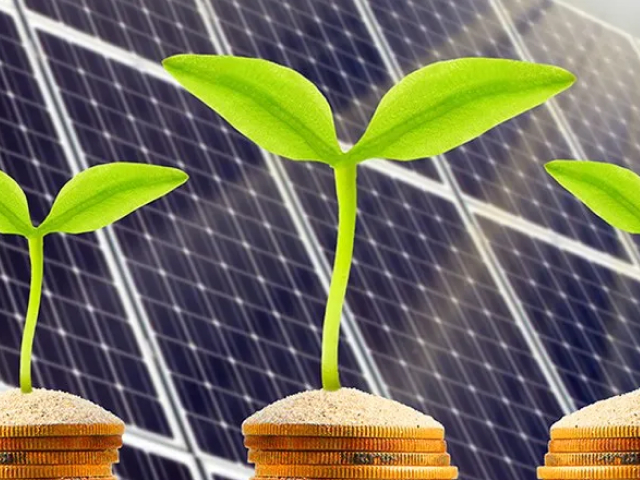
India has tremendous potential for generating solar energy. Being a tropical country that benefits from solar radiation almost throughout the year, India receives about 3000 hours of sunshine. This makes us among the best places in the world to capture and harness the power of solar energy. According to the National Institute of Solar Energy’s study, the country has the potential to generate 748.98 GW of solar power.
What makes solar energy so suitable for India? Let’s take a look:
- First and foremost, solar energy is an inexhaustible source of energy, hence the best replacement of other non-renewable energies in India. Luckily for us, we have the sun quite generous on us, making it impossible for us to run out of solar power.
- Also, solar energy is environment friendly. You don’t need the help of any other resource, and by employing the power of sun, you actually reduce the carbon footprint on environment.
- Solar energy can be used for different purposes such as electricity, cooking, heating, both in urban and rural areas of India. Since it is inexhaustible, one can use it for household chores even during power outages.
- You don’t need a power grid to use solar energy. It can be installed anywhere. The installation requires some inspection and an energy audit to make the most use of it, but once set up, solar panels generally last up to 30-40 years.
With so many benefits, there’s no doubt that solar is our future, and it should already be our present. So, what’s holding solar from going main stream? Why the majority of population hasn’t invested in solar panels for their homes?
The answer is lack of familiarity with the whole installation process and the fear of red tape. People are still largely unaware about the financial benefits and amazing return on investments that rooftop solar power comes with. Most people perceive solar panels to be an investment that requires large upfront capital, leaving it accessible only to the rich. They also fear that their roofs will look ugly or won’t be adding any warmth to the house. All this coupled with the government paperwork needed to complete the process of installation makes people wary of going solar.
Another reason is that solar is still just seen as a way to contribute to the environment rather than a great investment which actually delivers returns and pays for itself in the long-term.
So, what’s to be done?
Bridging the information asymmetry is a key factor in whether or not solar energy can become mainstream in India and effectively replace fossil fuels as a means to generate electricity. For India’s solar power dreams to be achieved, we must engage meaningfully to translate our geographical position to our advantage. There should be a positive, retail led ecosystem that eases the process for consumers and helps speed up adoption of solar power, especially when it comes to rooftop solar panels, since they are the most price sensitive and crucial sub sector to replace fossil fuel power generation, making solar a household reality.
On their part, many private companies are attempting to bridge this gap by generating awareness and tools that scientifically access the gains of switching to solar power for users and help with multiple financing options to reduce the initial investment.
You can try a free online tool called Solarizer to figure out if solar is the way to go for you or not.
Want to know more about rooftop solar panels?
Give us a call at Solar Luminous! We understand power better than anyone else. With over three decades of solar experience and experts who can guide you through your solar journey right from the moment you make the decision to when you start generating solar power, we assure you a smooth and hassle-free experience.
To request a call back, visit us at www.solarbyluminous.com and leave your phone number with us!
Luminous Power Technologies Pvt. Ltd. Plot No. 150, Sector 44, Gurgaon, Haryana - 122003
C-56, Mayapuri Industrial Area Phase-2 Mayapuri, New Delhi - 110064